
ROTARY COLUMN LAYER PALLETIZER
Complete-Layer Palletizing for Large Bottles & Containers
ATOP rotary column layer palletizers are designed to lift, rotate and transfer complete product layers for stable pallet building. The system can be configured for 5-gallon bottles, large containers, pails, drums, cases and other layer-forming applications.
KEY APPLICATIONS
Wide Range of Products and Industries
Gantry palletizing systems can be configured around different product shapes, packaging formats, gripper designs and pallet patterns for a range of industrial applications.
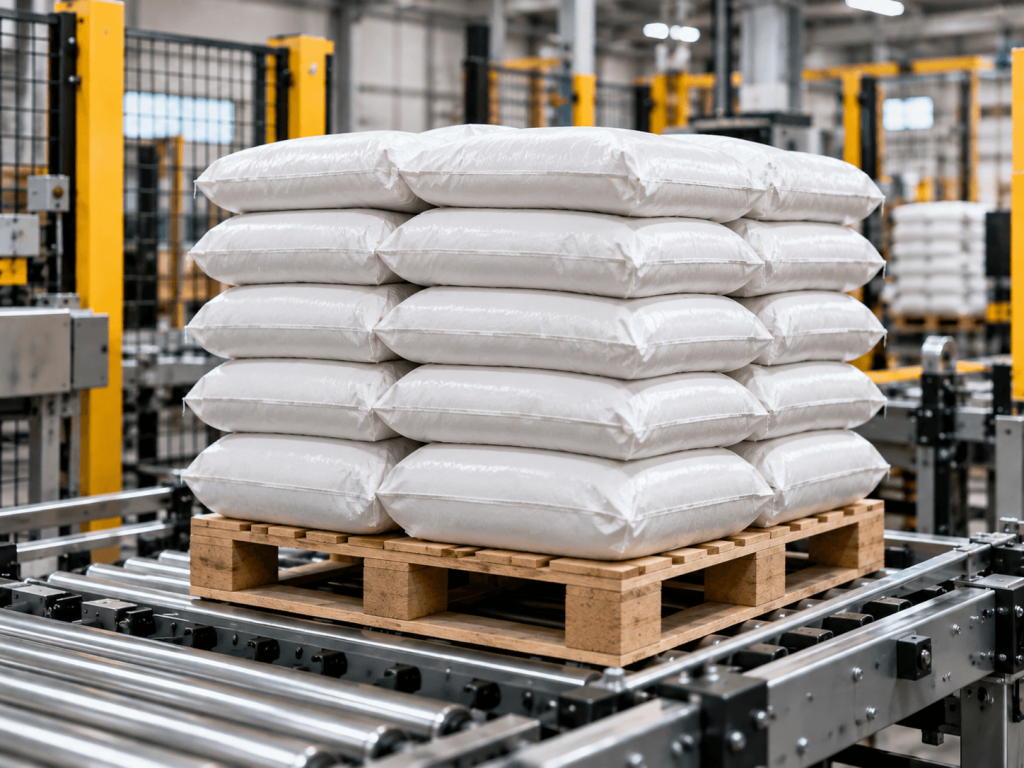
Bags & Sacks
Palletizing for bagged products used in food, feed, chemical, powder and building-material applications.
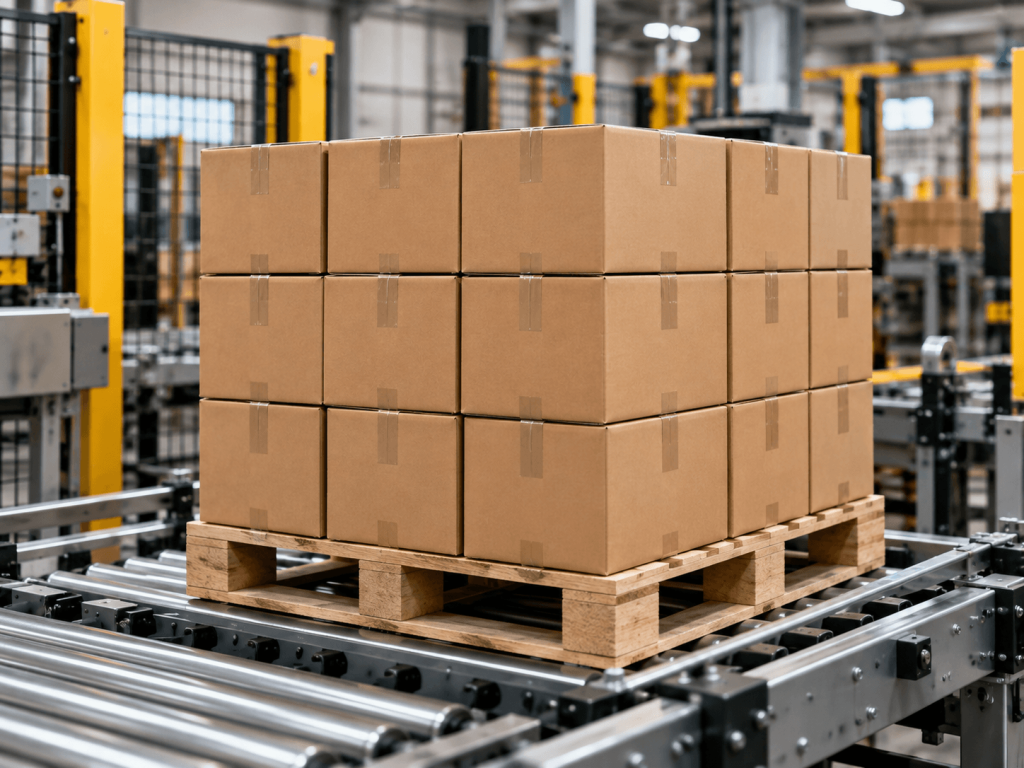
Cases & Cartons
Flexible palletizing for cases and cartons with different dimensions, orientations and stacking patterns.
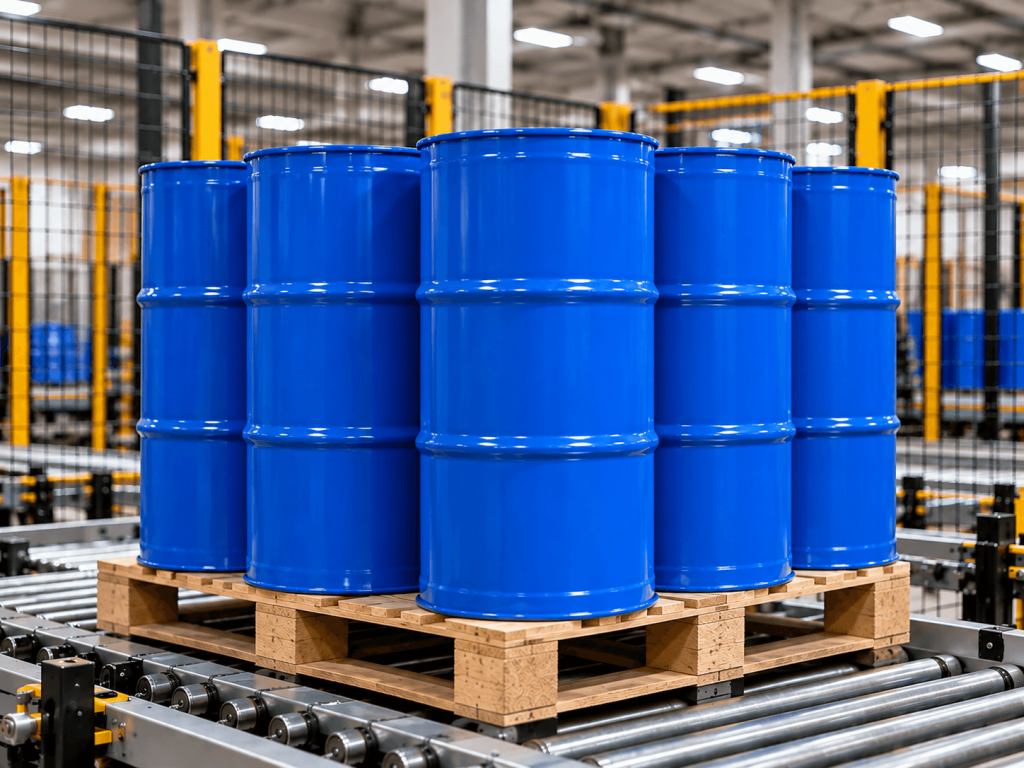
Pails & Containers
Configurable handling for rigid pails, jerrycans and containers according to product geometry and pallet layout.
Other Industrial Products
Application-specific palletizing can be engineered for other regularly handled products after evaluating the product and packaging requirements
WHY GANTRY PALLETIZING
Linear-Motion Palletizing Built Around Your Layout
Gantry palletizers use an overhead frame and controlled Cartesian linear motion to move products between the infeed and programmed pallet positions. The working area, gripper and pallet locations can be configured around the product and production-line layout.
This makes the gantry concept suitable for applications where defined linear movement, configurable pallet positions and application-specific product handling are important to the overall system design.
Controlled Linear Motion
Cartesian axes provide defined movement between pickup and palletizing positions.
Configurable Grippers
The handling tool can be designed around the product shape, packaging and pickup method.
Flexible Pallet Positions
The working area can be configured around one or multiple palletizing positions.
Wide Product Compatibility
Gantry systems can be engineered for bags, cases, cartons, pails and other suitable products.
Programmable Pallet Patterns
Product placement can follow configured stacking patterns according to the application.
Production-Line Integration
Conveyors, pallet handling and downstream equipment can be coordinated with the palletizing system.
HOW IT WORKS
From Product Infeed to Finished Pallet
ATOP collaborative palletizing systems combine product conveying, robotic handling and programmed pallet patterns into a flexible automation process.
01
Product Infeed
Products enter the palletizing system from the upstream production or packaging line.
02
Product Pickup
The gantry gripper engages the product at the defined pickup position.
03
XYZ Transfer
Controlled linear axes move the product from the pickup point toward the target pallet position.
04
Programmed Placement
The product is positioned according to the configured pallet pattern and stacking sequence.
05
Finished Pallet
The completed pallet is ready for downstream conveying, wrapping or material handling.
System
What's included
Overhead gantry frame
Fixed steel frame construction carrying the layer-forming mechanism above the pallet.
Bag infeed conveyor
Feeds filled bags into the layer-forming station.
Layer board placement
Automatically inserts slip sheets between layers for stack stability.
Control cabinet
PLC-based full automatic control with layer pattern programming.
SYSTEM CONFIGURATIONS
Flexible Configurations for Your Production Line
Gantry palletizing systems can be configured around the product flow, pallet positions and available production-line space. The final layout is engineered according to the actual application requirements.
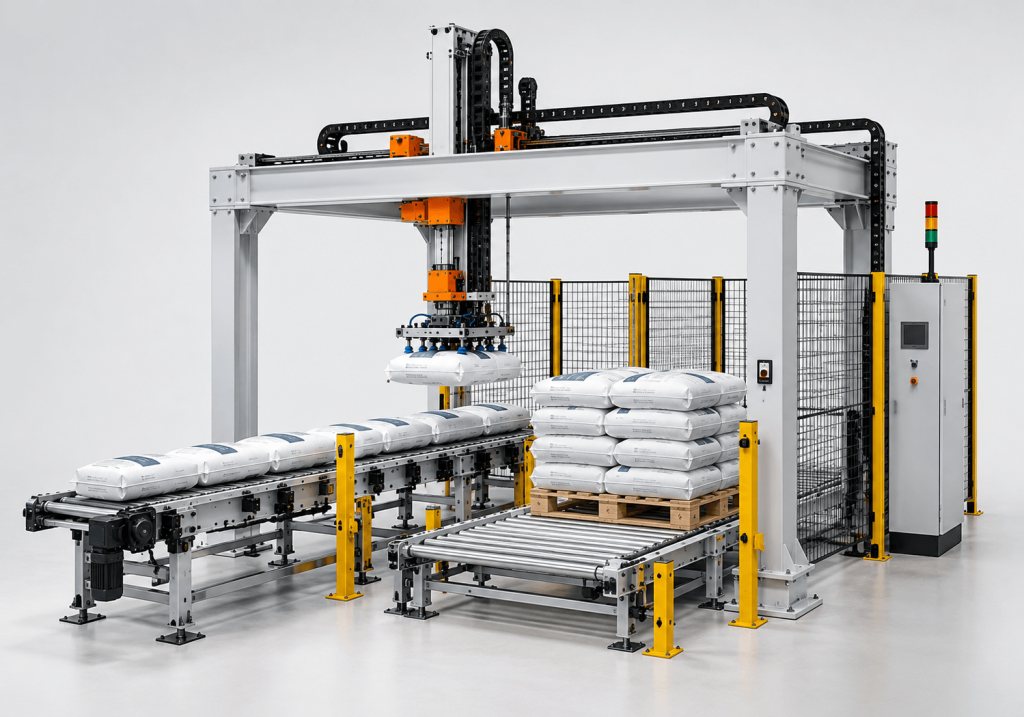
Single Pallet Position
A straightforward configuration with one defined palletizing position within the gantry working area.
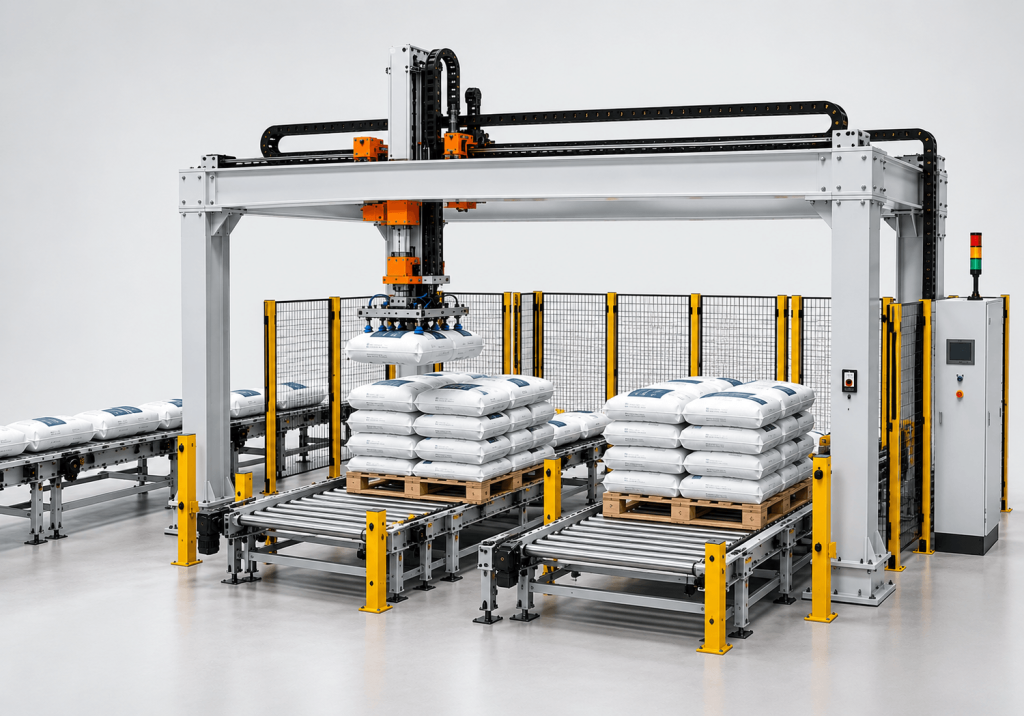
Multiple Pallet Positions
The gantry working area can be configured to serve multiple pallet positions when required by the application.
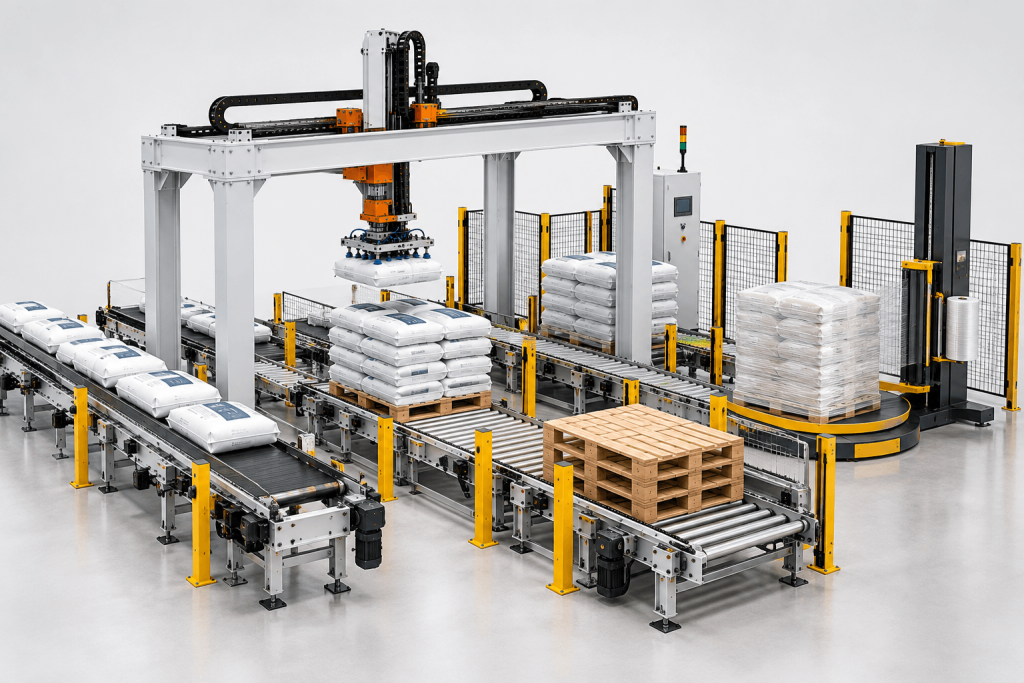
Customized Line Layout
Product infeed, pallet locations and downstream handling can be arranged around the available production-line space.
COMPLETE END-OF-LINE INTEGRATION
More Than a Single Machine
A gantry palletizer is only one part of an efficient end-of-line process. Product conveying, pallet handling, safety controls and downstream equipment all need to work together around the actual production flow.
ATOP can configure the palletizing section together with conveyors, pallet handling and stretch wrapping according to the required line layout and downstream material flow.
The palletizer is the core. The complete material flow makes it a system.
ENGINEERED AROUND YOUR APPLICATION
The Right Configuration Starts with Your Product
Product characteristics, handling method, pallet pattern and available line space all influence the final gantry palletizing configuration. These factors are evaluated together before the system layout and handling concept are defined.
Product Characteristics
Product dimensions, weight, packaging material, shape and stability are evaluated to determine the handling requirements.
Gripper & Pickup Method
The handling tool is selected or configured according to the product surface, shape and required pickup method.
Pallet & Stacking Pattern
Pallet dimensions, layer arrangement, product orientation and target stacking requirements define the placement sequence.
Production-Line Layout
Infeed direction, pallet positions, available floor space and downstream material flow are considered when configuring the system layout.
FREQUENTLY ASKED QUESTIONS
Gantry Palletizer FAQs
Answers to common questions about Cartesian gantry palletizing, product handling, pallet configurations and end-of-line integration.
What is a gantry palletizer?
A gantry palletizer is an automated handling system that uses a fixed overhead structure and controlled linear axes to move products between pickup and palletizing positions. It is also commonly described as a Cartesian palletizer because its movement is based on linear coordinate axes rather than the articulated joints used by a conventional industrial robot.
Can a gantry palletizer serve multiple pallet positions?
A gantry working area can be configured around more than one pallet position when required by the application. The final arrangement depends on the machine structure, product flow, pallet locations and available production-line space
Can stretch wrapping be added after palletizing?
Yes. An automatic stretch wrapping machine can be integrated downstream so that completed pallets continue from palletizing to wrapping and final pallet discharge. The exact arrangement depends on the available layout and downstream handling requirements.
What products can a gantry palletizer handle?
Gantry palletizing systems can be configured for suitable bags, sacks, cases, cartons, pails, rigid containers and other industrial products. The final handling concept depends on product dimensions, weight, packaging material, stability and the required pallet pattern.
Can pallet conveyors be integrated with the system?
Yes. Empty-pallet infeed, pallet positioning and full-pallet discharge conveyors can be incorporated into the overall palletizing layout according to the required material flow
What information is needed to design a gantry palletizing system?
For an initial application evaluation, we normally need the product dimensions and weight, packaging type, required output, pallet size, stacking pattern and available production-line layout. Photos or videos of the product and existing line are also helpful when evaluating the handling concept and system interface.
PLANNING A GANTRY PALLETIZING PROJECT?
Tell Us About Your Product & Production Line
Share your product details, required output, pallet configuration and available line layout. ATOP will evaluate the application and recommend a suitable gantry palletizing system concept for your production requirements.
Product & Packaging
Product type, dimensions, weight and packaging format..
Required Output
Target production capacity, line speed or peak output.
Pallet Requirements
Pallet dimensions, stacking pattern and required load height.
Line Layout
Available floor space, layout drawings or existing line photos.