
ROBOTIC PALLETIZING SYSTEMS
Robotic Palletizing Systems Built for Flexible Production
ATOP robotic palletizing systems automate the handling and stacking of cases, bags, bottles, shrink packs and other packaged products. Each system is configured around your product, production speed, pallet pattern and line layout, with application-specific grippers and flexible end-of-line integration.
ONE SYSTEM FOR MULTIPLE APPLICATIONS
Handles a Wide Range of Products
From rigid cases and industrial bags to bottles and shrink-wrapped packs, ATOP robotic palletizing systems can be configured for different product formats, pallet patterns and production requirements.
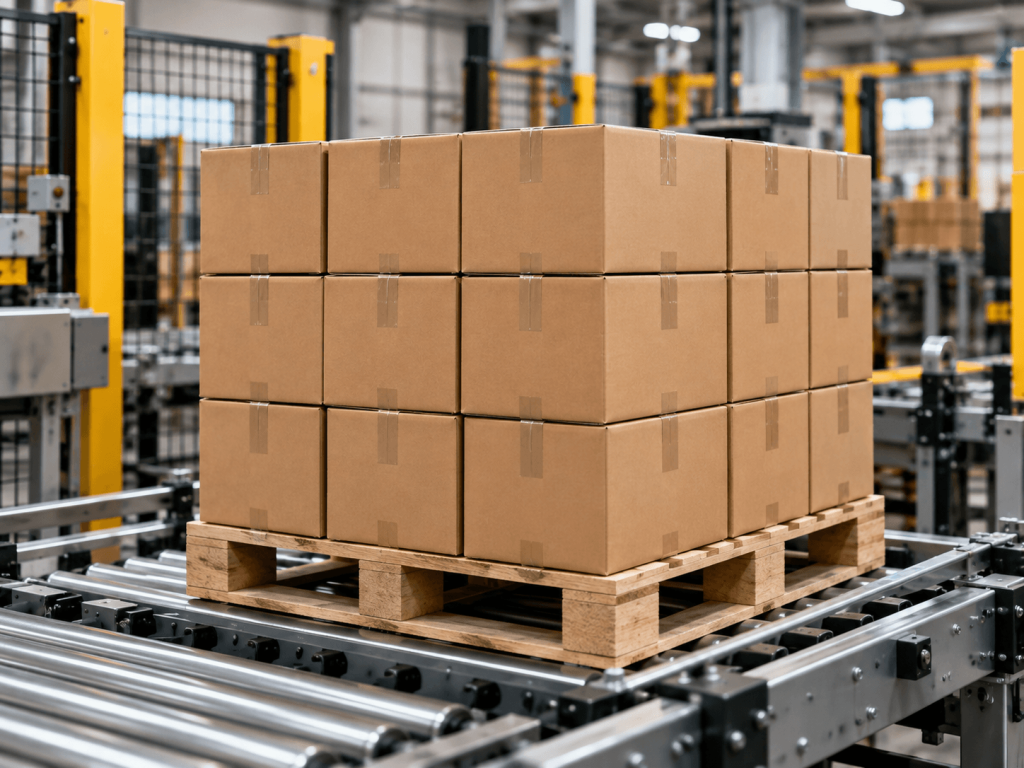
Cases & Cartons
Stable palletizing for cartons and cases across food, beverage and industrial production.
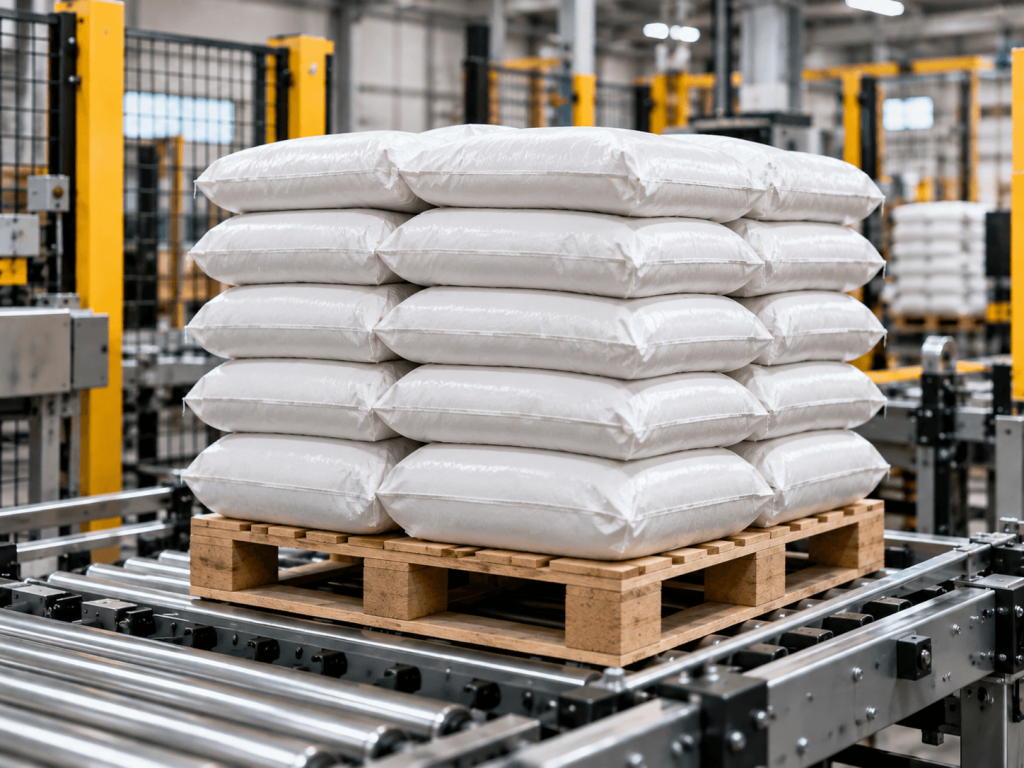
Bags & Sacks
Robotic handling for bagged products with application-specific gripping and pallet patterns.
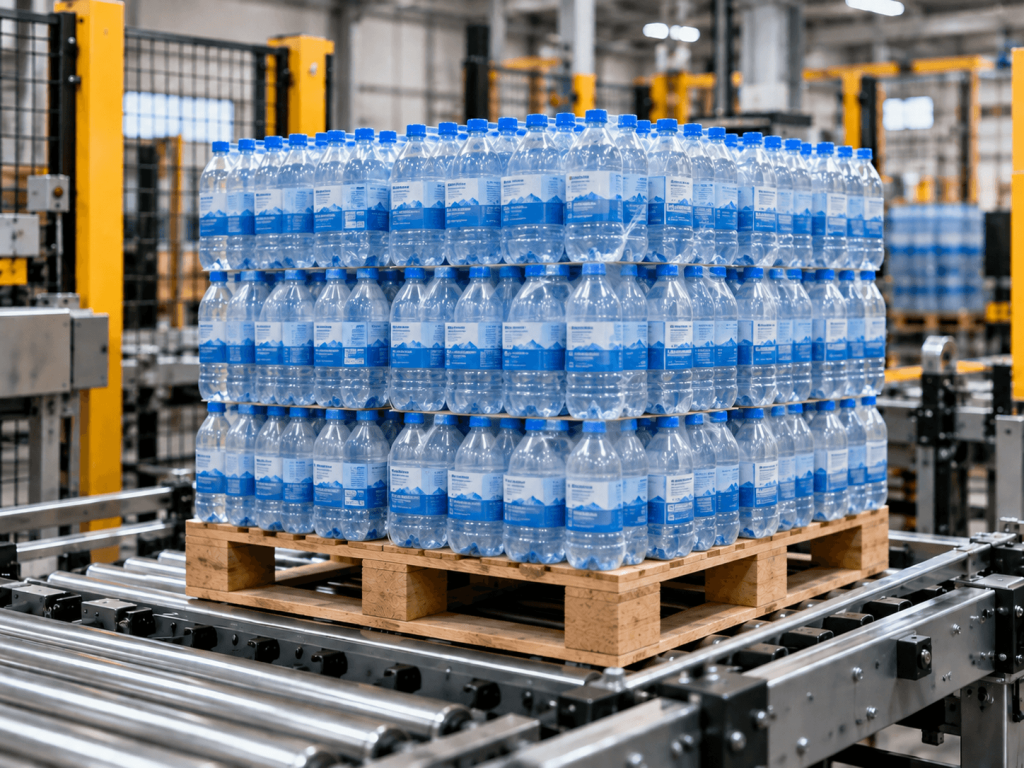
Bottles & Containers
Flexible palletizing for grouped bottles, containers and rigid packaged products.
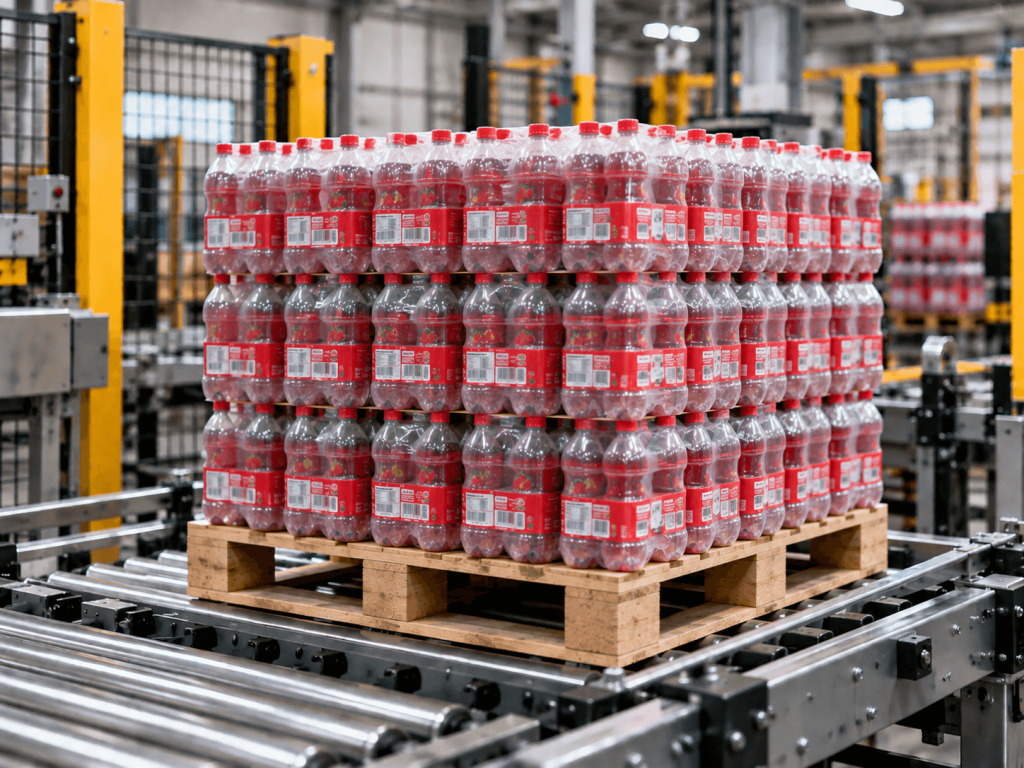
Shrink Packs
Automated palletizing for shrink-wrapped multipacks and bundled products
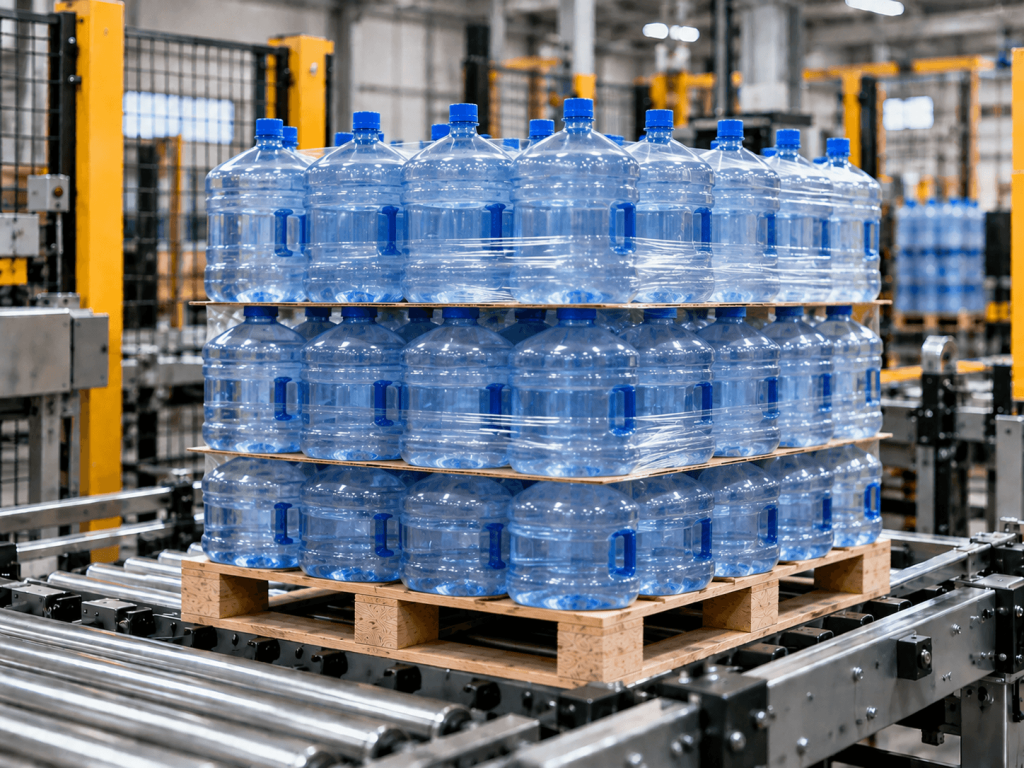
Large Water Bottles
Robotic palletizing solutionsfor large water bottles andcontainers with stable andefficient handling.
WHY ROBOTIC PALLETIZING
Flexibility Built Around Your Production
A robotic palletizing system can be configured around your product, production speed, pallet pattern and available floor space. Compared with a fixed palletizing process, robotic automation provides greater flexibility when product formats, stacking patterns or line requirements change.
The robot itself is only one part of the solution. Reliable palletizing also depends on the correct end-effector, product infeed, pallet handling, controls and system layout working together as one coordinated process.
Product-Specific Grippers
Programmable Pallet Patterns
Flexible Cell Layouts
Easy Line Integration
HOW IT WORKS
From Infeed to Finished Pallet
A coordinated robotic palletizing process connects product handling, robotic pick-and-place, pallet building and downstream pallet flow into one automated system.
01
Product Infeed
Products enter the palletizing cell from the upstream production or packaging line.
02
Robotic Pick & Place
The application-specific gripper picks and transfers products to the programmed pallet position.
03
Pallet Building
Products are placed according to the required pallet pattern, layer by layer.
04
Full Pallet Output
The completed pallet is transferred from the robotic cell to the downstream handling area.
05
Downstream Integration
Full pallets can continue to stretch wrapping, pallet conveying, warehouse handling or other downstream processes.
ENGINEERED FOR YOUR APPLICATION
More Than a Robot Arm
A reliable robotic palletizing system is not defined by the robot alone. Product characteristics, cycle requirements, gripper design, conveyor flow, pallet handling, safety and controls all need to work together.
ATOP evaluates these elements as a complete palletizing process and configures the system around the actual production line rather than simply supplying a standalone robot.
The right robot is important. The right system around it is what makes palletizing work.
Robot & Controller
Robot payload, reach, motion range and cycle requirements are evaluated according to the product and palletizing task.
End-Effector Design
Vacuum, clamping, fork-type or application-specific tooling can be selected according to product shape, weight and handling requirements.
Infeed & Pallet Handling
Product conveyors, pallet positioning and full-pallet flow are configured around the required production process and available layout.
Safety & Controls
Cell guarding, sensors, control logic and operator interfaces are integrated according to the final system configuration and project requirements.
REAL ATOP PROJECTS
Robotic Palletizing in Real Production
Explore real ATOP robotic palletizing applications across high-speed beverage production, large-container handling and different packaging formats.
WHY CHOOSE ATOP
Built Around the Real Production Line
A successful palletizing project depends on more than selecting a robot. ATOP combines application evaluation, equipment engineering, manufacturing and end-of-line integration to develop a system around the actual production requirement.
01
Product Infeed
Products enter the palletizing cell from the upstream production or packaging line.
02
Robotic Pick & Place
The application-specific gripper picks and transfers products to the programmed pallet position.
03
Pallet Building
Products are placed according to the required pallet pattern, layer by layer.
04
Full Pallet Output
The completed pallet is transferred from the robotic cell to the downstream handling area.
05
Downstream Integration
Full pallets can continue to stretch wrapping, pallet conveying, warehouse handling or other downstream processes.
faq
Frequently Asked Questions
What products can a robotic palletizer handle?
ATOP robotic palletizing systems can be configured for cases, cartons, bags, shrink-wrapped packs, bottles, containers and other packaged products. The final configuration depends on product dimensions, weight, packaging characteristics, production speed and the required pallet pattern.
How do you select the right robot for a palletizing application?
Robot selection is based on the complete application rather than payload alone. Product weight, required reach, pallet height, cycle rate, pick-and-place movement, gripper weight, line layout and future production requirements should all be considered when configuring the system.
Can a robotic palletizer integrate with an existing conveyor?
In many projects, yes. The robotic palletizing cell can be engineered around an existing production or packaging line, provided the product flow, conveyor conditions, available space and required interfaces are suitable. ATOP evaluates the existing line information before defining the integration concept.
Robotic or high-level palletizing — which should I choose?
The choice depends on the application. Robotic palletizing is often considered when production requires flexibility across product formats, pallet patterns or cell layouts. High-level palletizing can be well suited to continuous production with stable product flow and high throughput requirements. Product type, speed, SKU mix, pallet pattern and available space should be evaluated together before selecting the system.
Can one robotic palletizer handle multiple product sizes?
Yes, a robotic palletizing system can be configured for different product sizes and pallet patterns when the application allows. Product changeover may involve selecting a different program or recipe, while some applications may also require gripper or mechanical adjustments. The exact changeover method depends on the products being handled.
What type of gripper does my product need?
The end-effector is selected according to the product shape, surface, weight, packaging strength and required handling method. Depending on the application, the system may use vacuum, clamping, fork-type or other application-specific gripping solutions.
Can stretch wrapping be integrated after robotic palletizing?
Yes. Depending on the project, full pallets can continue from the robotic palletizing cell to pallet conveyors, stretch wrapping, pallet handling and other downstream processes. These functions can be configured as part of a broader end-of-line automation system.
What information is needed to design a robotic palletizing system?
To evaluate your application, please provide the product type, dimensions and weight, production speed, pallet size, required pallet pattern or stacking height, number of SKUs, upstream conveyor information and available layout. Photos, videos or a production-line drawing are also helpful for system evaluation.
LET’S BUILD YOUR SYSTEM
Need a High-Level Palletizing Solution?
Tell us your product. capacity and pailet requirements, Our team wil providea professional solution for your production line.