
AUTOMATIC DEPALLETIZING SYSTEMS
Automatic Depalletizing Systems for Continuous Product Flow
Automatically unload products from pallets and transfer them into downstream production processes. ATOP depalletizing systems are configured around product type, pallet pattern, required output and production-line layout.
Controlled removal of products from loaded pallets.
Configured for different products and packaging formats.
Products are transferred into the required downstream flow.
Designed around pallet infeed and downstream equipment.
APPLICATIONS
Products & Packaging We Can Depalletize
ATOP depalletizing systems can be configured around different product types, packaging formats, pallet patterns and downstream handling requirements.
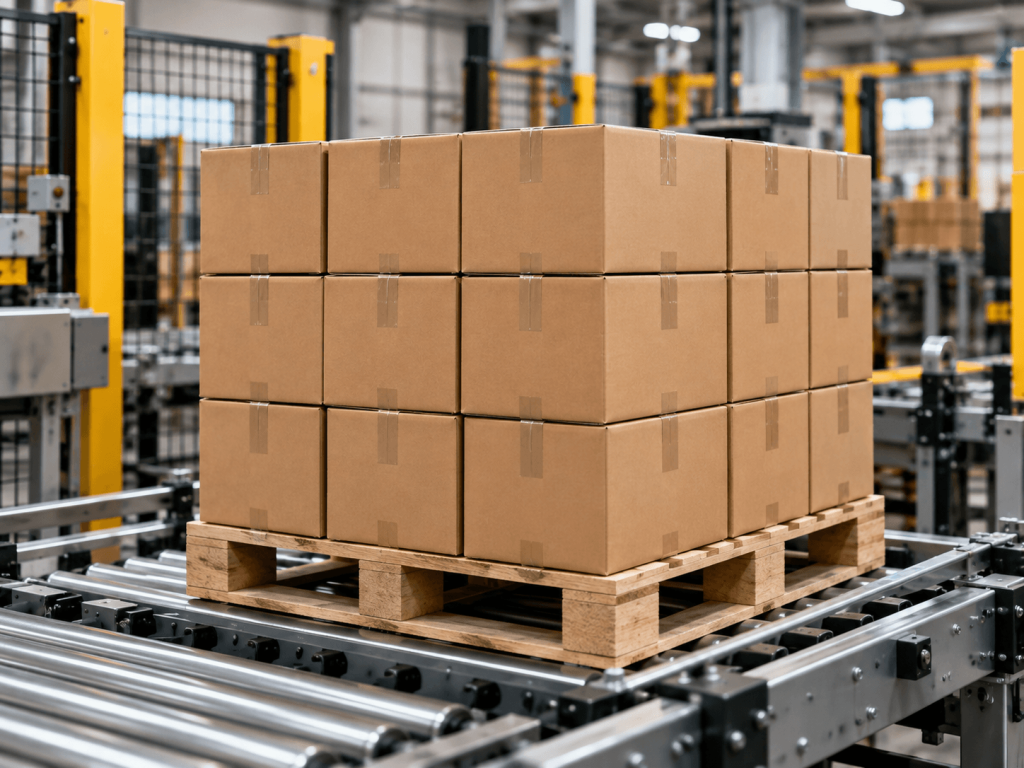
Cartons & Cases
Corrugated cartons and packed cases in stable pallet loads.
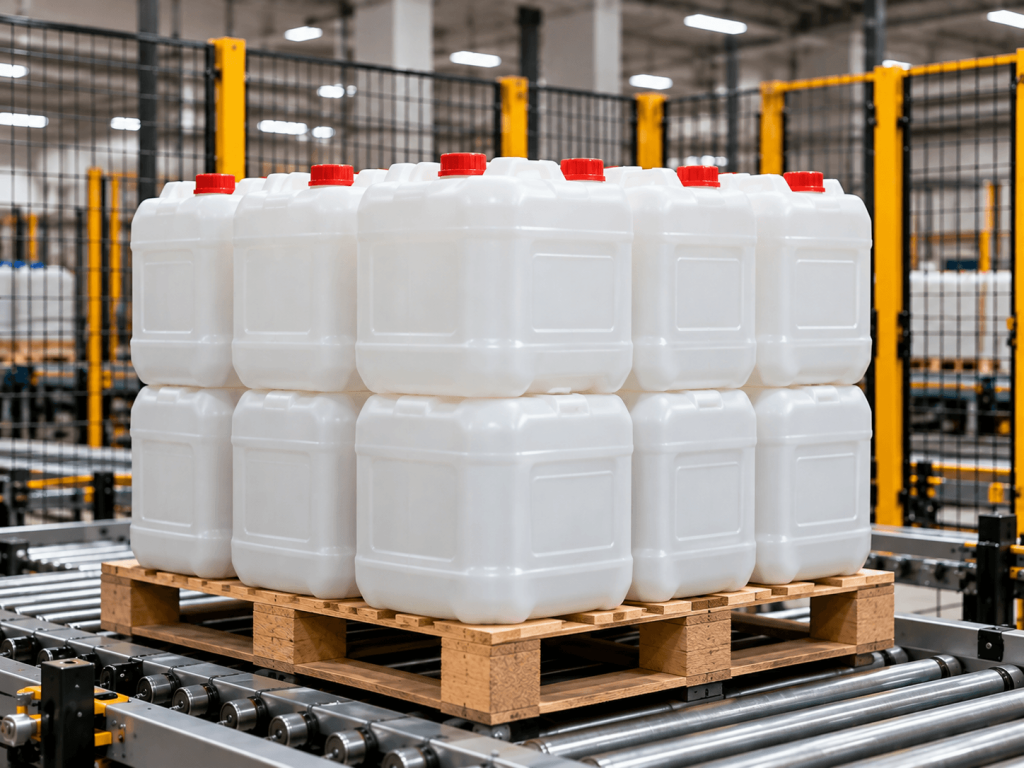
Containers & Packs
Rigid containers and grouped packs in regular pallet patterns.
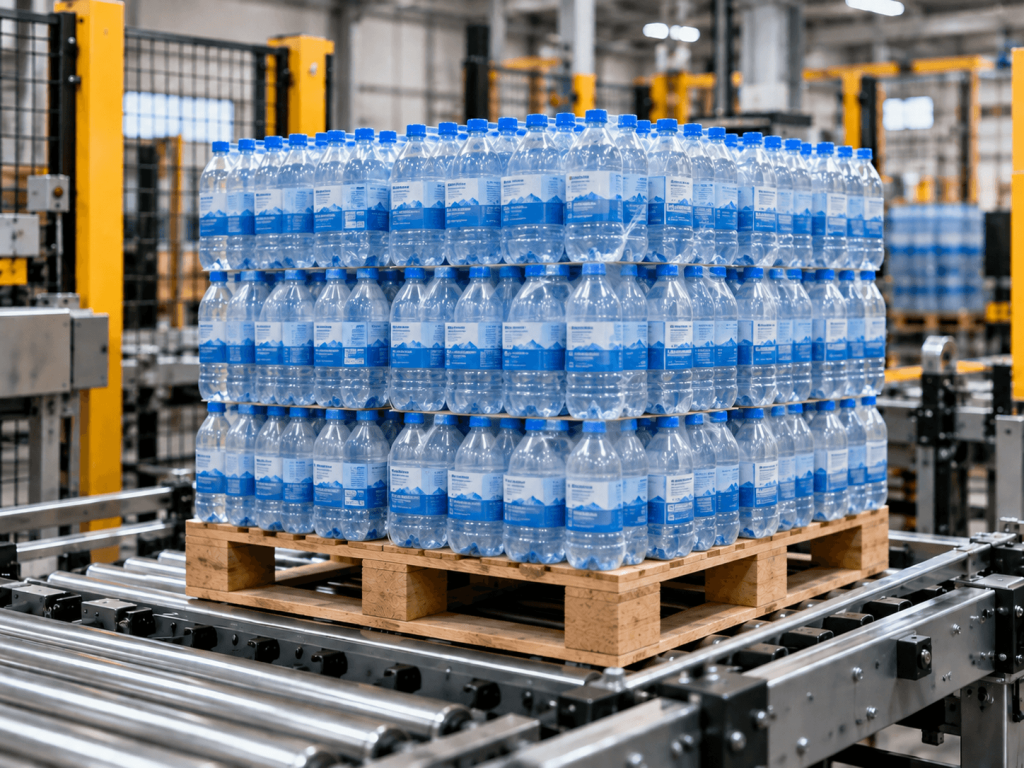
Bottles & Trays
Grouped bottles, trays and shrink-wrapped product packs.
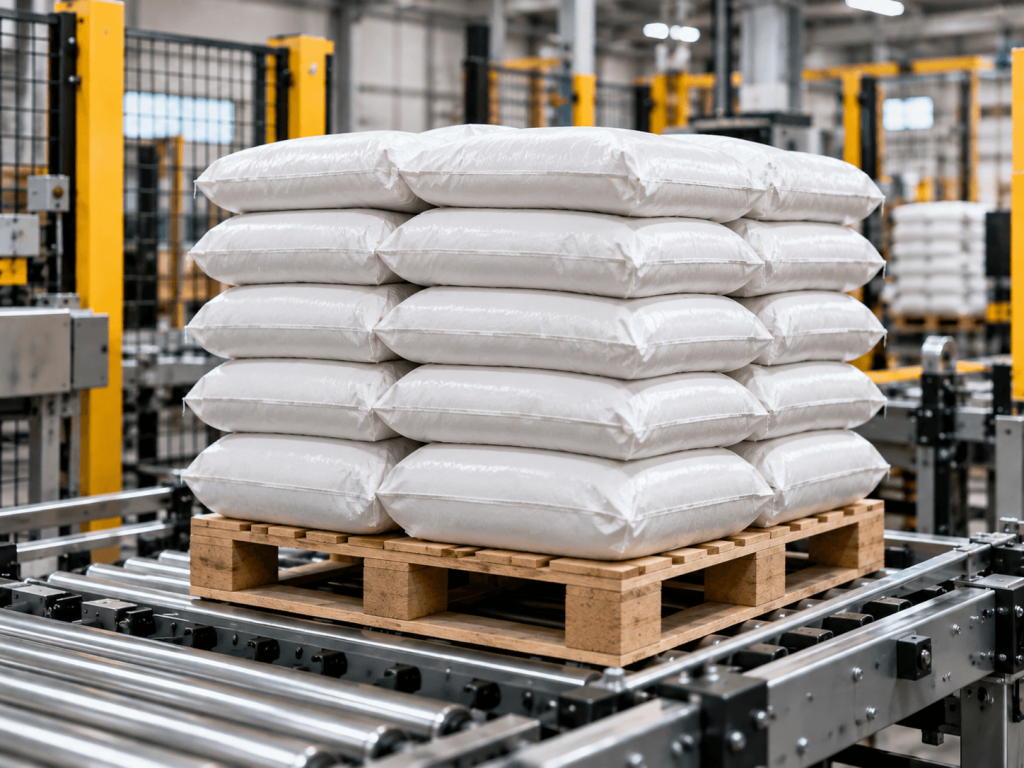
Bags & Sacks
Palletized bags and sacks with suitable load stability.
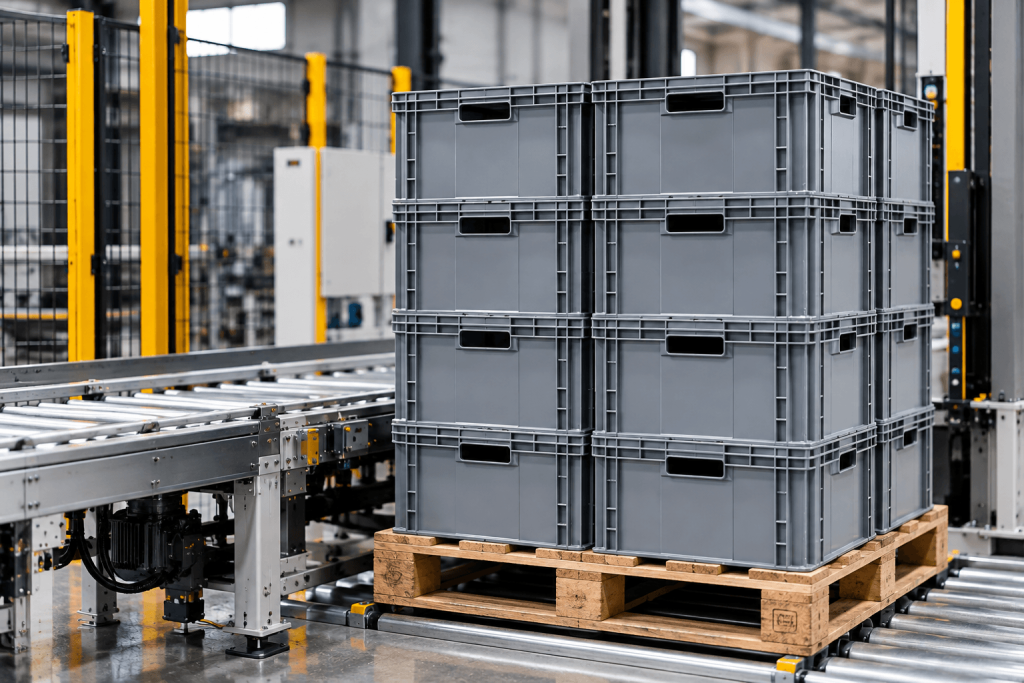
Other Packaged Products
Crates, totes and application-specific packaged products.
DEPALLETIZING SYSTEM TYPES
Choose the Right Depalletizing Method for Your Product
Different products, pallet patterns and production requirements call for different unloading methods. ATOP configures the depalletizing approach around the actual product, pallet load, required output and downstream process.
01
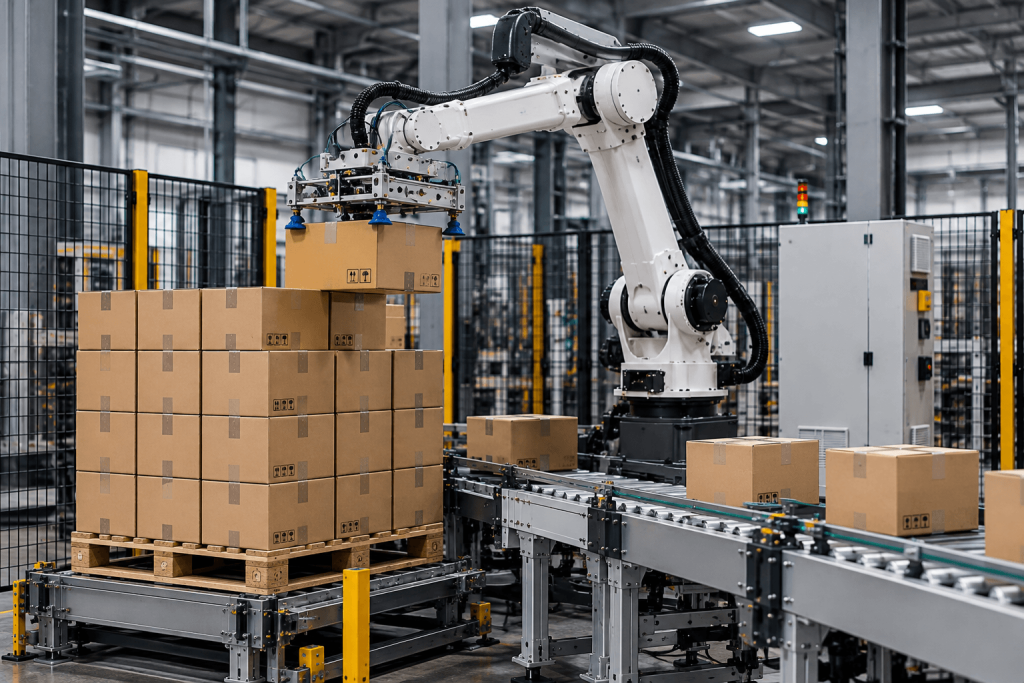
Robotic Case Depalletizing
A robotic system removes individual cases or grouped products from the pallet and transfers them to the required discharge conveyor.
Cartons · Cases · Multi-SKU Lines
02
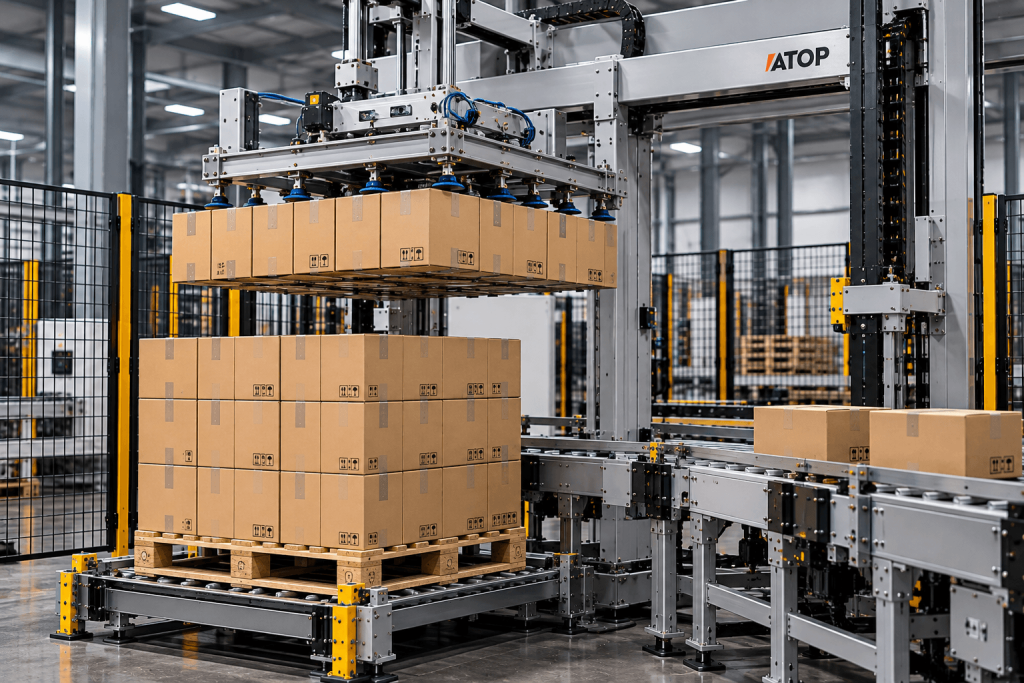
Layer Depalletizing
Products are removed by complete layers where the pallet pattern and packaging format support stable layer handling.
High Output · Regular Pallet Loads
03
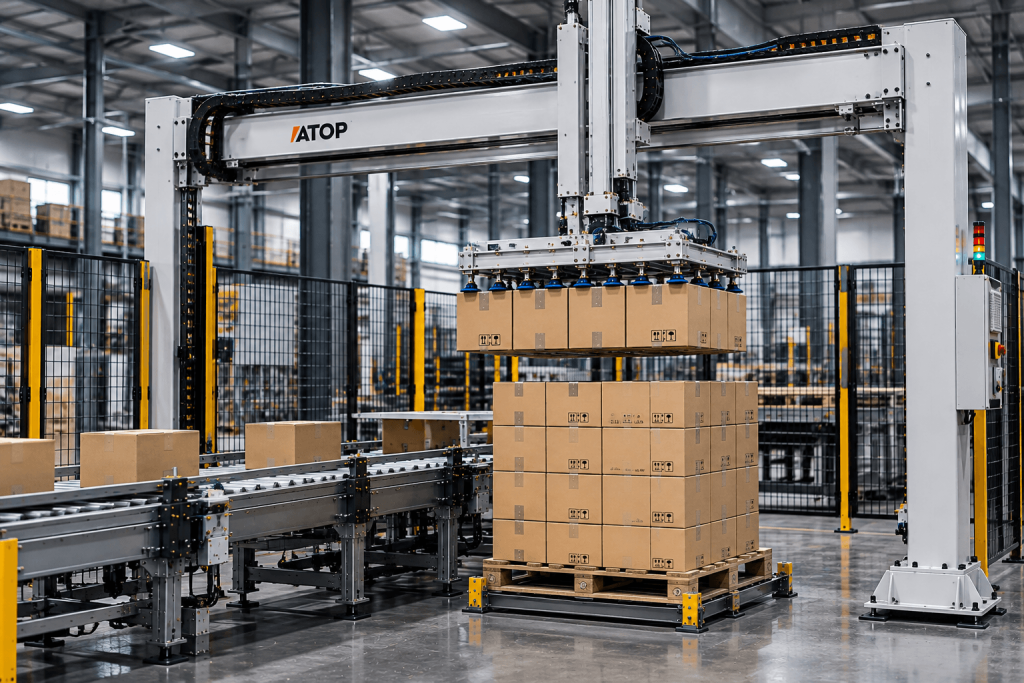
Gantry Depalletizing
An overhead handling structure provides controlled product removal within a defined pallet and conveyor layout.
Structured Layouts · Repeatable Loads
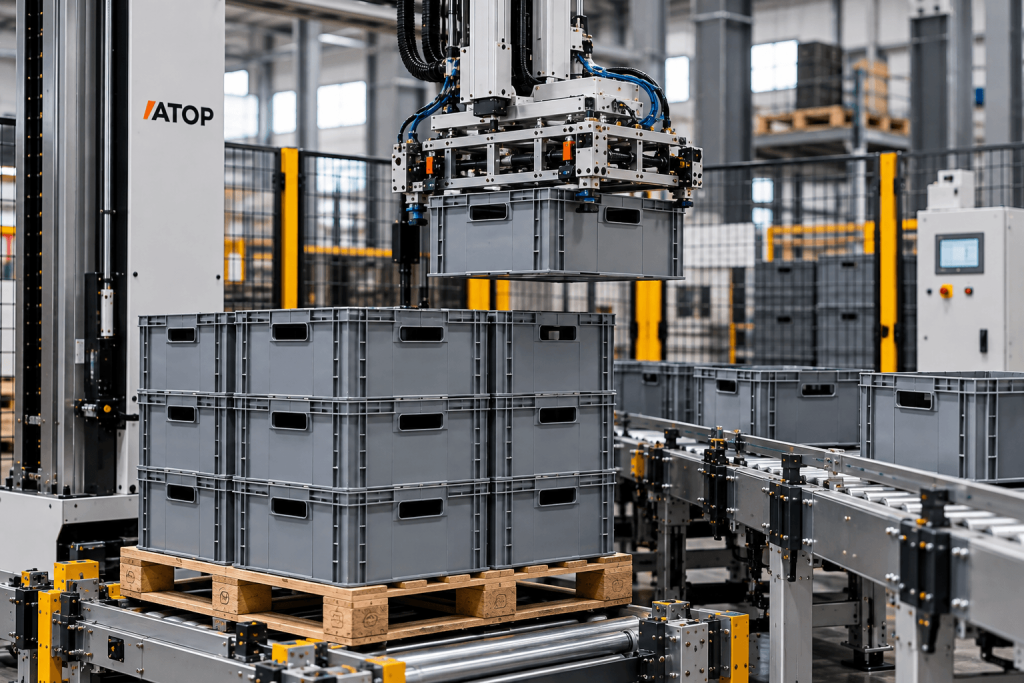
04
Product-Specific Depalletizing
Application-specific handling can be configured for crates, containers, packs and other products requiring dedicated tooling.
Crates · Containers · Special Packs
HOW IT WORKS
From Full Pallet to Continuous Product Flow
A coordinated depalletizing process receives the loaded pallet, removes products according to the selected handling method, and transfers them into the required downstream production flow.
01
Loaded Pallet Infeed
Loaded pallets are transferred into the designated depalletizing position.
02
Product Detection & Positioning
The system identifies or confirms the product position and pallet load for controlled handling.
03
Depalletizing
Products are removed from the pallet according to the configured unloading method.
04
Product Discharge
Unloaded products are transferred onto the discharge conveyor in the required flow.
05
Downstream Production
Products continue to the next production, packaging or material-handling process.
Why Automate Depalletizing
A More Stable Start to Your Production Flow
Automated depalletizing reduces repetitive manual handling and creates a more controlled product feed into downstream processes, helping production lines maintain a more consistent operating rhythm.
Continuous Product Supply
Maintain a controlled supply of products to downstream equipment and production processes.
Reduced Manual Handling
Reduce repetitive pallet unloading tasks and dependence on continuous manual product handling.
Consistent Product Flow
Create a more repeatable unloading process and a steadier product flow into the next operation.
Flexible Line Integration
Configure pallet infeed, product discharge and downstream connections around the actual production layout.
PRODUCTION LINE INTEGRATION
From Pallet Infeed to Downstream Product Flow
Depalletizing can be integrated with pallet conveying, product discharge and downstream equipment to create a coordinated material flow around the actual production layout.
The depalletizer is the core. Pallet handling and product flow determine how it fits into the complete line.
01
Pallet Infeed
Loaded pallet enters the system.
02
Depalletizing System
Products are removed from the pallet.
03
Product Outfeed
Unloaded products enter the required flow.
04
Downstream Equipment
Products continue to the next process.
FREQUENTLY ASKED QUESTIONS
Automatic Depalletizing System FAQs
Common questions about depalletizing methods, product handling, pallet patterns, production-line integration and system selection.
What is an automatic depalletizer?
An automatic depalletizer removes products from loaded pallets and transfers them into a downstream conveyor or production process. Depending on the application, the system may use robotic, layer-based, gantry or application-specific handling methods.
How does an automatic depalletizing system work?
A loaded pallet is transferred into the unloading position, where the system removes products according to the configured handling method. The unloaded products are then transferred onto a conveyor or into the next production process, while the empty pallet can be discharged for further handling.
Robotic depalletizer or layer depalletizer — which should I choose?
Robotic depalletizing is often considered where product flexibility, different formats or individual product handling are important. Layer depalletizing can be suitable for stable, regular pallet loads where products can be handled by complete layers. The final selection depends on the product, pallet pattern, required output and production layout.
What information is needed to select a depalletizing system?
Key information includes product type, dimensions and weight, pallet size, pallet pattern, maximum loaded-pallet height, required output, available layout and the required downstream product flow. Photos, pallet drawings and production-line videos are also helpful for application evaluation.
What products can an automatic depalletizing system handle?
Depalletizing systems can be configured for cartons, cases, grouped packs, trays, containers, bags, crates and other packaged products. Suitability depends on product dimensions, weight, packaging stability, pallet pattern and the required handling method.
Can one depalletizing system handle different pallet patterns?
It may be possible to handle multiple pallet patterns when the system, tooling and controls are configured for the required product and load variations. The actual solution should be evaluated from the pallet patterns, product specifications and required changeover conditions.
Can a depalletizer connect to an existing production line?
Yes. A depalletizing system can be configured around existing pallet infeed, product conveyors and downstream equipment when the available layout and equipment interfaces are suitable. ATOP evaluates the material flow and connection requirements during system planning.
Is automatic depalletizing suitable for my application?
Suitability depends on the product, pallet load, production rate, available space and downstream process. If you are unsure, send us your product information, pallet pattern and production-line layout or video, and we can evaluate the application before recommending a configuration.
PLANNING A DEPALLETIZING PROJECT?
Tell Us About Your Product & Production Line
Share your product details, required output, pallet configuration and available line layout. ATOP will evaluate the application and recommend a suitable depalletizing configuration for your production requirements.