
INTEGRATED AUTOMATION SOLUTIONS
Integrated Packaging & End-of-Line Automation Systems
Automate the process you need — from packaging and product handling to conveying, palletizing, pallet logistics, warehousing and loading. ATOP builds the automation around your actual product, production flow and project scope.
Built around ATOP palletizing and material-handling technologies, with upstream and downstream equipment integrated according to project requirements.
Connect packaging, handling and palletizing into one coordinated flow.
Integrate new automation with suitable existing production equipment.
Configure product routing and automation around different formats and line layouts.
Extend pallet flow toward AGVs, warehousing, dispatch or loading processes.
COMPLETE AUTOMATION SCOPE
From Product to Pallet — and Beyond
An integrated automation project can begin at different stages of the production process. Depending on your product and existing equipment, the scope can extend from filling, weighing and packaging through conveying, palletizing and load securing to pallet logistics, warehousing or loading.
ATOP configures the automation scope around what your line actually needs — not every project requires every stage.
Your project can start and end at different points in this flow. Existing equipment can remain in the line when its capacity, controls and mechanical interfaces are suitable for the planned automation scope.
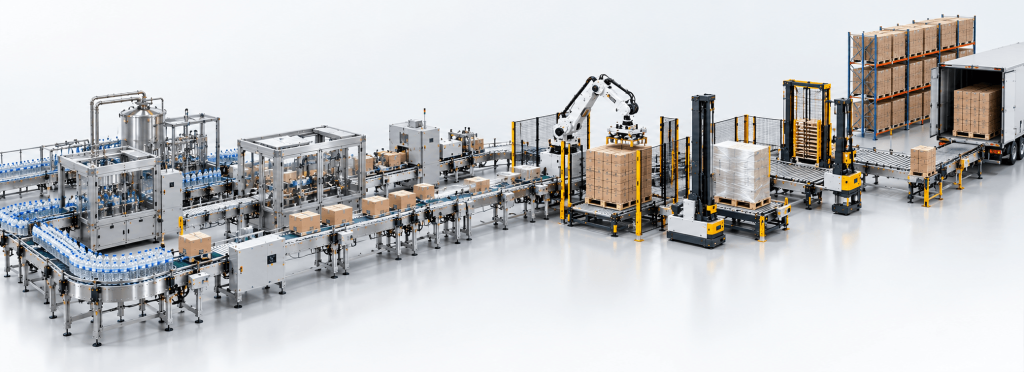
Product / Material
Product handling, feeding or process output.
Filling / Weighing
Filling, dosing or weighing according to the product process.
Packaging
Packing, bagging, case packing, sealing or labeling.
Conveying & Handling
Transfer, accumulation, orientation, sorting and routing.
Palletizing
Robotic, high-level, low-level or application-specific palletizing.
Load Securing
Stretch wrapping, strapping or other load-stabilizing processes.
Pallet Logistics
Pallet conveying, transfer, buffering and AGV / AMR interface.
Warehouse / Loading
Warehouse transfer, dispatch buffering and loading interface.
WHERE SHOULD YOUR AUTOMATION START?
Flexible Starting Points for Your Project
You don’t need to replace your entire production line to introduce automation. ATOP can develop the project around your existing process — whether automation starts with packaging, connects to existing equipment, begins at palletizing, or extends beyond the finished pallet.
01
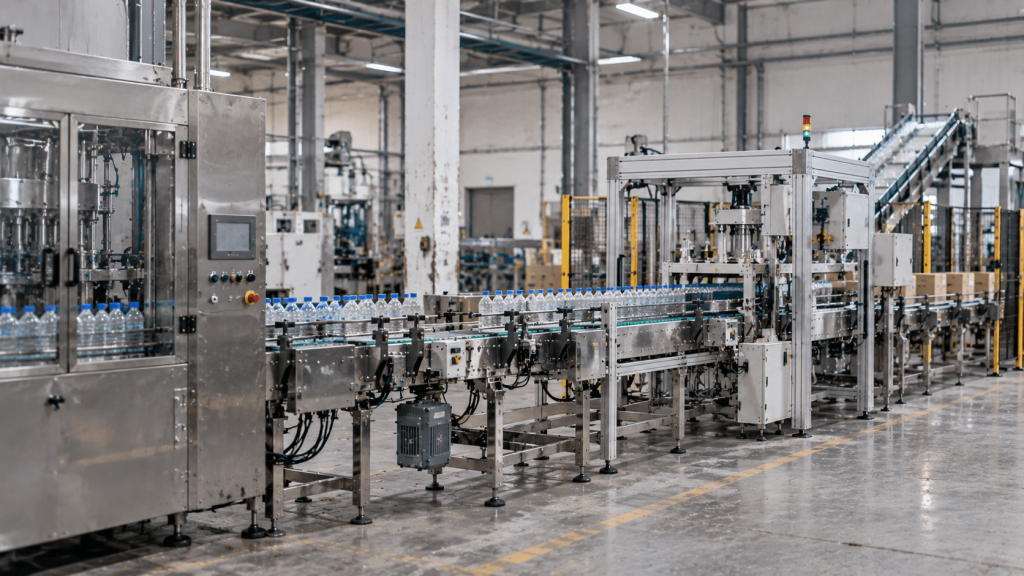
Start From Packaging
Need to automate secondary packaging and everything that follows? We can configure packing, conveying, palletizing and downstream handling around your product and required output.
02
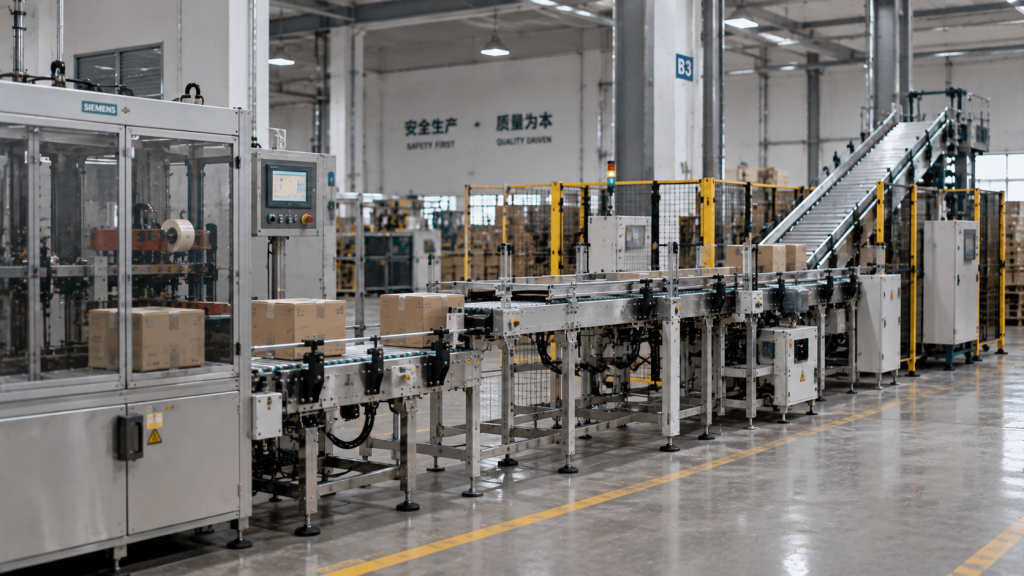
Integrate With Existing Equipment
Already have filling, packing, sealing or labeling equipment? Suitable existing machines can remain in the line while new conveying, handling and downstream automation are integrated around them.
03
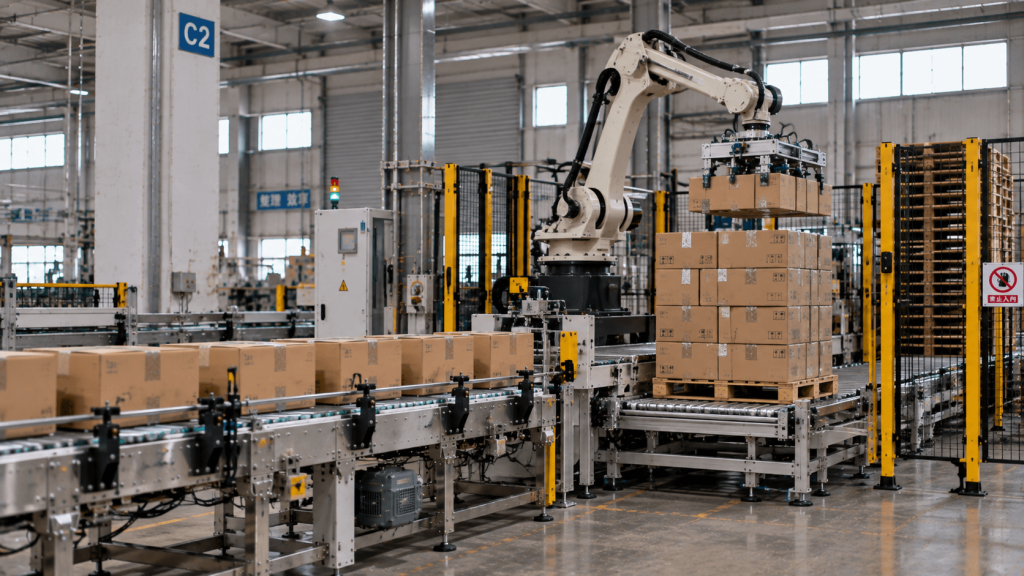
Start From Palletizing
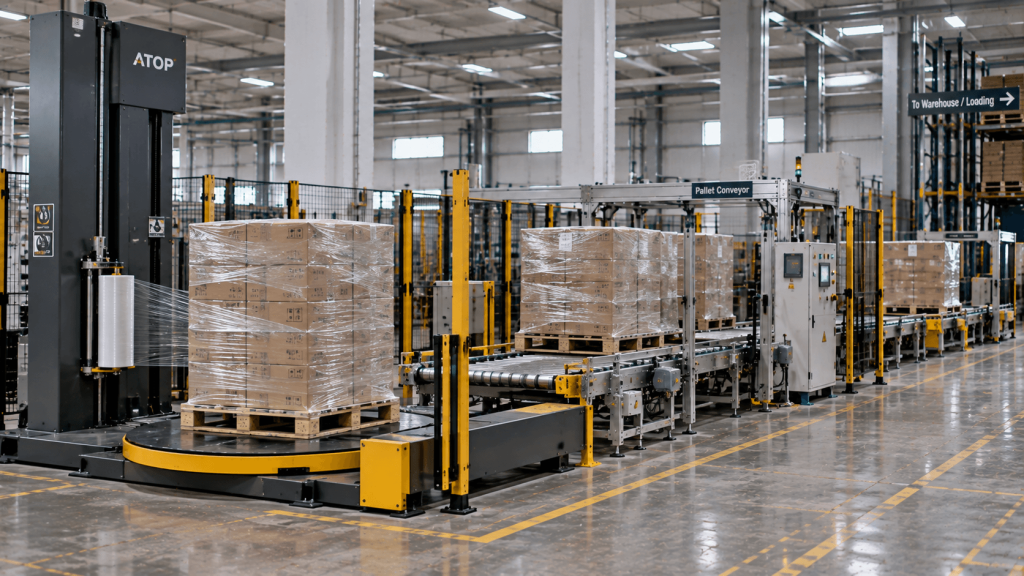
If your products are already packed and ready for palletizing, ATOP can configure the palletizing cell together with product infeed, pallet handling and load securing.
04
Extend Beyond Palletizing
Continue automation after palletizing with load securing, pallet conveying, transfer, buffering and interfaces for AGVs, warehousing or loading operations.
AUTOMATION BY PRODUCT TYPE
Different Products. Different Automation Flows.
There is no single automation flow for every production line. Bottles, cartons, bags and rigid containers require different packaging, handling and palletizing processes. ATOP configures the system around the product, existing process, required output and final logistics method.
BEVERAGE AUTOMATION
Beverage & Bottled Water
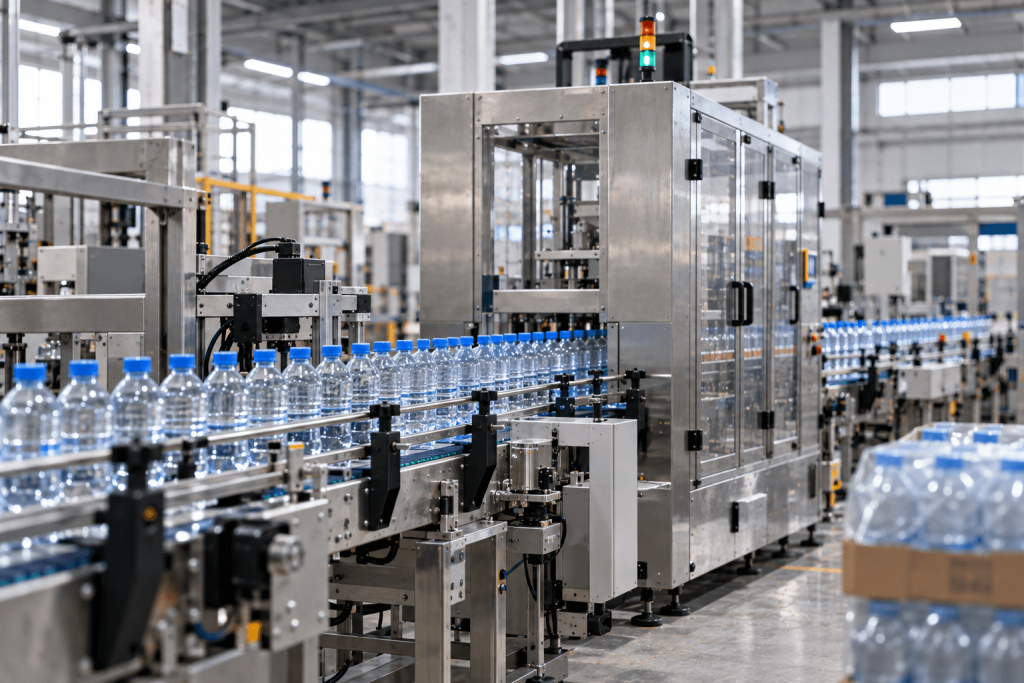
For bottled water, beverages and similar container products, automation can begin after filling or at an existing packaging machine and continue through secondary packaging, palletizing and finished-pallet handling.
BAGGING AUTOMATION
Bags & Sacks
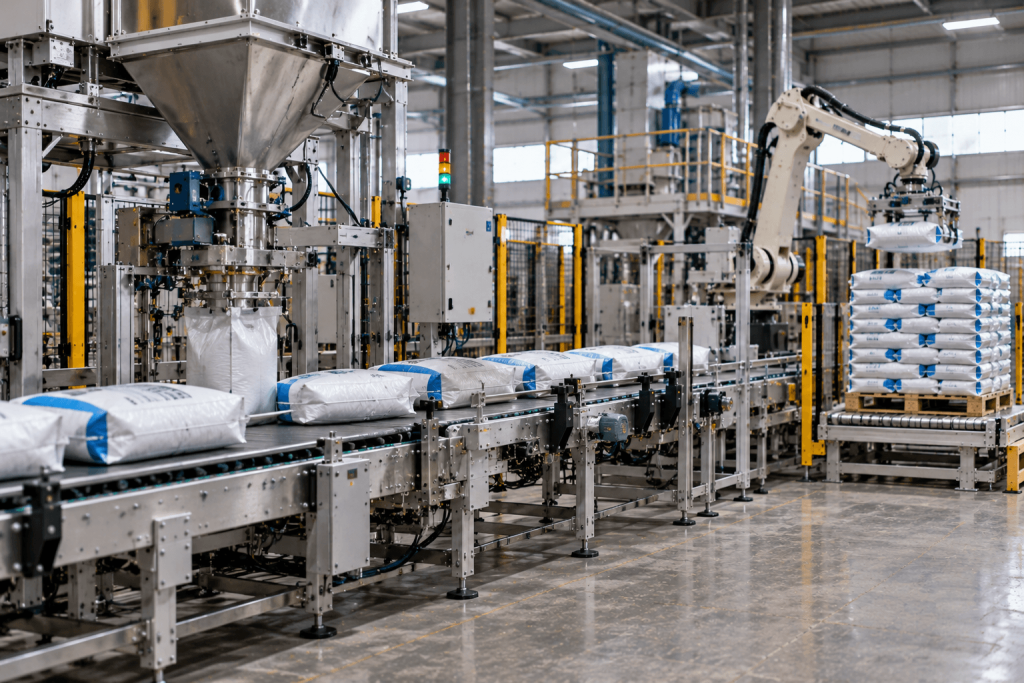
Powders, granules and bulk products can require weighing, bag filling and closing before bags are shaped, conveyed, palletized and secured for storage or shipment.
CASE HANDLING AUTOMATION
Cartons & Cases
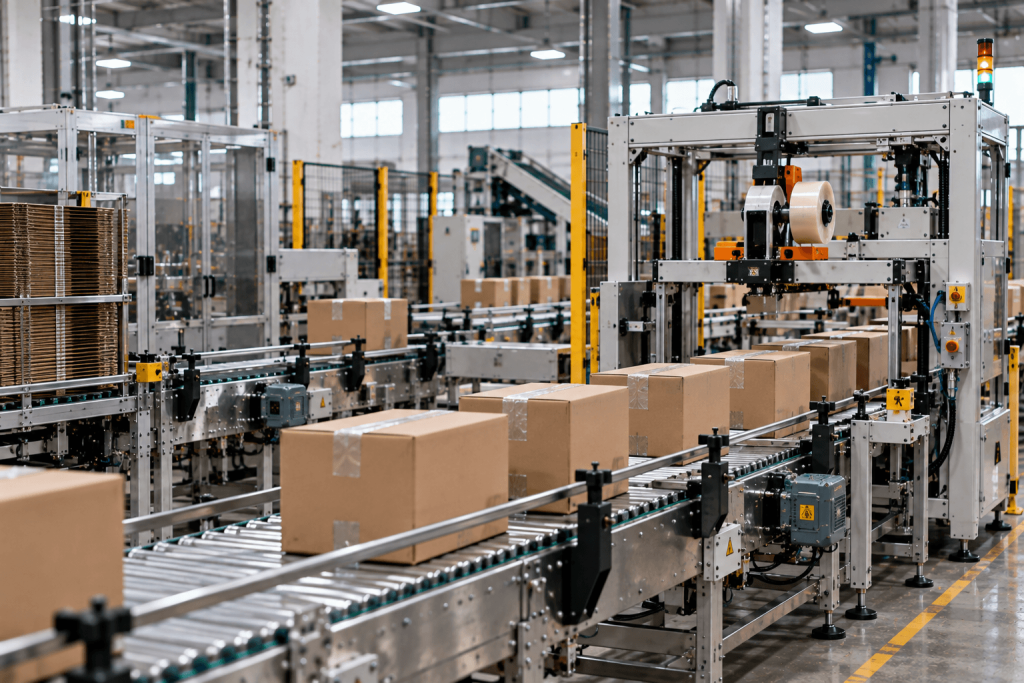
Carton and case lines can integrate case forming, product packing, sealing and identification with conveying, palletizing and downstream pallet handling.
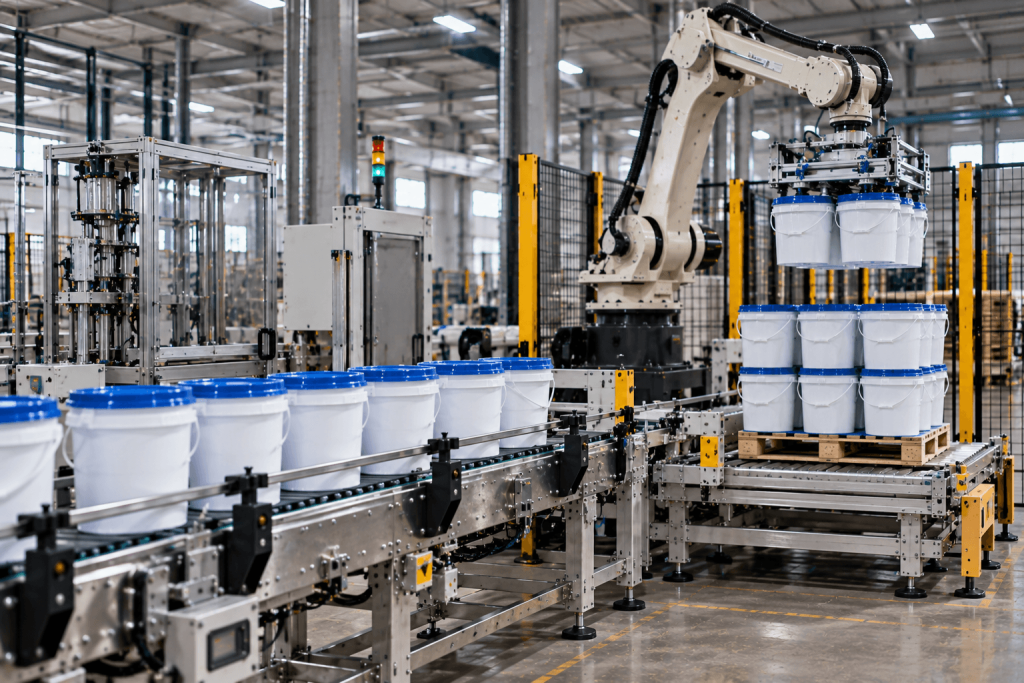
CONTAINER HANDLING
Drums, Buckets & Containers
Rigid containers may require dedicated orientation, gripping and transfer methods depending on their dimensions, weight, stability and final pallet or rack configuration.
HOW WE INTEGRATE
One Line. One Coordinated Automation Plan.
ATOP’s core expertise is palletizing and end-of-line material handling. For broader automation projects, we can integrate suitable upstream packaging equipment and downstream logistics interfaces around your existing production process.
The final scope is defined project by project — from individual equipment integration to a coordinated automation line.
ATOP Core Systems
Palletizing · Depalletizing · Pallet Handling · Conveying· Stretch Wrapping
Integrated Equipment
Packing · Bagging · Sealing · Labeling · Inspection
Line & Logistics Interfaces
Wrapping · AGV Interface · Warehouse Interface · Loading Interface
OUR ENGINEERING PROCESS
How We Engineer an Integrated Automation Line
A reliable automation line starts with the process, not the machine. We evaluate your product, existing equipment, required output and available layout before defining the equipment configuration and system interfaces.
The goal is to make each process work as part of one coordinated production flow.
Product & Process Analysis
Existing Line Review
Layout & Material Flow
Capacity & Equipment Matching
System Integration & Controls
FAT, Installation & Commissioning
PROVEN IN REAL PRODUCTION
Integrated Automation in Real Production Lines
See how ATOP palletizing, conveying, load securing and pallet-handling systems are applied in real production environments — from high-speed beverage lines to integrated finished-pallet automation.
Each project is configured around the customer’s product, required output, available layout and downstream handling process.
HIGH-SPEED BEVERAGE AUTOMATION
70,000 BPH Dual-Channel Palletizing Line
PROJECT SNAPSHOT
LINE OUTPUT
Beverage Production
APPLICATION
Up to 70,000 BPH
SYSTEM CONFIGURATION
Dual-Channel Infeed + Palletizing + Pallet Handling
ENGINEERING FOCUS
High-output product flow and coordinated pallet handling
PROJECT OVERVIEW
Designed for high-output beverage production, this system coordinates dual-channel product infeed with palletizing and finished-pallet handling. The line configuration was developed around the required production output and available factory layout, allowing continuous downstream product flow without treating palletizing as an isolated machine.
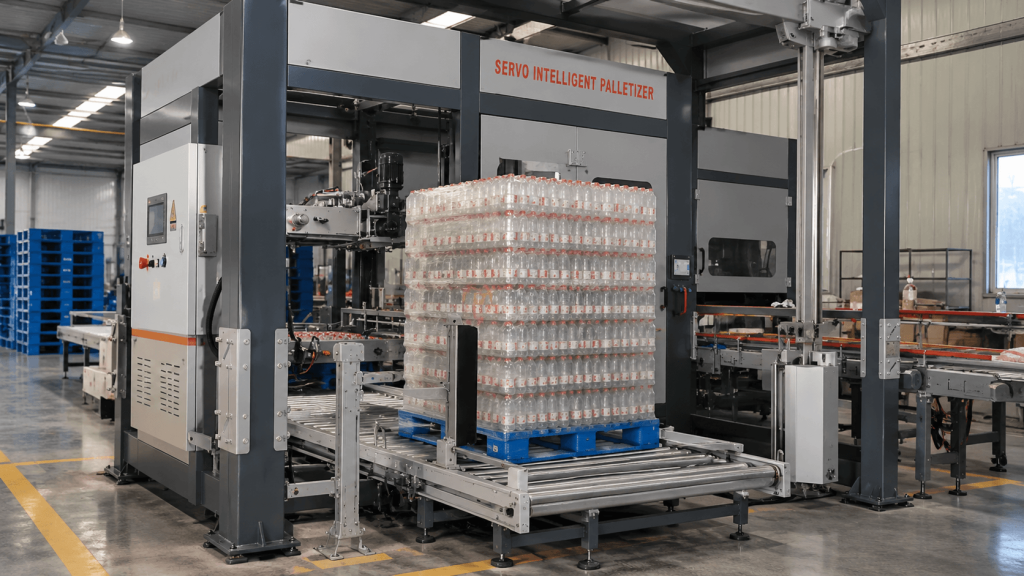
PALLETIZING + LOAD SECURING
36,000 BPH Palletizing & Stretch Wrapping Line
LINE OUTPUT
Up to 36,000 BPH
SYSTEM SCOPE
Palletizing + Wrapping
APPLICATION
Beverage
An integrated end-of-line application connecting product conveying and palletizing with automatic stretch wrapping and finished-pallet outfeed.
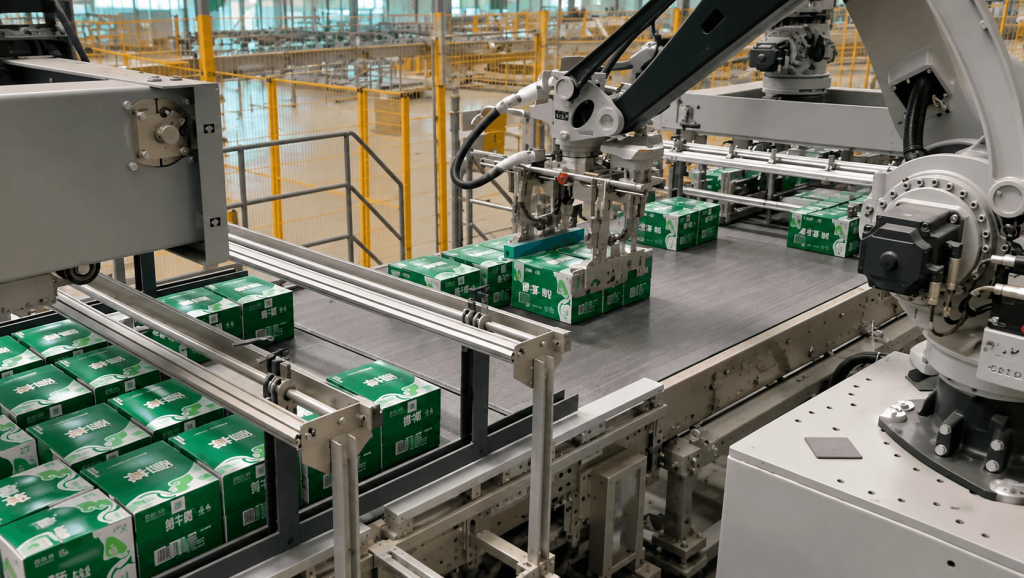
DUAL-INFEED ROBOTIC PALLETIZING
80,000 BPH Robotic Palletizing System
LINE OUTPUT
Up to 80,000 BPH
CONFIGURATION
Dual Product Infeed
TECHNOLOGY
Robotic Palletizing
A high-output robotic palletizing application coordinating dual product infeed with centralized palletizing and downstream pallet handling.
FREQUENTLY ASKED QUESTIONS
Integrated Packaging & End-of-Line Automation FAQs
Practical answers to common questions about packaging line integration, existing equipment, system capacity, palletizing, controls and downstream automation.
Can ATOP integrate automation with our existing production or packaging equipment?
Yes. A complete line does not necessarily need to be replaced. Existing filling, labeling, packing, sealing or conveying equipment can remain in the production line when its capacity, mechanical interfaces and control conditions are suitable for the planned automation.
ATOP can configure new conveying, product handling, palletizing, pallet handling and other downstream automation around the existing process. Before developing the solution, we evaluate the current equipment, product flow, line speed, available layout and required interfaces.
Where can an integrated automation system start and end?
The automation scope can start and end at different stages of the production process.
Depending on the application, a project may begin after filling or weighing, at an existing packaging machine, from product conveying, or directly from palletizing. The downstream scope can end after palletizing or continue through stretch wrapping, pallet conveying, pallet handling and interfaces with AGVs, warehousing or loading operations.
The system scope is defined according to the actual production process rather than a fixed equipment package.
How do you determine the required capacity of the automation system?
System capacity is determined from the actual production flow rather than the nominal speed of a single machine.
We evaluate the upstream line output, product and package dimensions, cases or packs per minute, product accumulation, pallet pattern, pallet change time and downstream handling requirements. Where necessary, buffering and accumulation are considered to help maintain continuous production during normal operating variations.
For beverage projects, both BPH and the actual number of finished cases or packs per minute should be evaluated.
Can one palletizing system receive products from multiple production lines?
Yes, depending on the required output, product formats, routing logic and line layout.
Multiple production lines can be routed to a centralized palletizing area when the conveying system, accumulation capacity, product identification and palletizing cycle are designed accordingly. For high-output applications, dual-infeed or multiple palletizing cells may also be considered.
The appropriate configuration should be determined from the combined line output and operating conditions rather than simply minimizing the number of palletizers.
Can the same automation line handle different products, package sizes and pallet patterns?
In many applications, yes. Multi-format operation can be designed into the system when the required product and pallet variations are defined during the engineering stage.
Different SKUs may use stored recipes for conveyor settings, product grouping, pallet patterns and palletizing parameters. Depending on the product, some format changes can be handled through control settings, while others may require mechanical adjustment or tooling changes.
Product dimensions, weight, packaging stability and the required changeover frequency should be provided during project evaluation.
Can the system connect with stretch wrappers, AGVs, warehouse systems or loading operations?
Yes. Finished-pallet automation can extend beyond the palletizer when required by the project.
Pallet conveying, stretch wrapping, pallet transfer and buffering can be configured as part of the downstream flow. Interfaces can also be planned for AGVs or AMRs, warehouse handling systems and loading processes according to the plant layout and logistics method.
Mechanical, electrical and control interfaces are defined during system engineering so that each stage can operate as part of a coordinated material flow.
PLANNING A DEPALLETIZING PROJECT?
Tell Us About Your Product & Production Line
Share your product details, required output, pallet configuration and available line layout. ATOP will evaluate the application and recommend a suitable depalletizing configuration for your production requirements.